On models and misunderstandings

Folks commonly misunderstand what the term ‘model’ means in science, particularly those operating from a particular theological or ideological model of the world that leads them to attack mainstream conclusions in climate science or evolutionary biology. This confused comment attacking climate models is fairly typical:

Extrapolation is not fact. It is estimate. And the accuracy is in the eye of the beholder. So if they [the North Carolina legislature] want to legislate HOW to estimate, it is far less controversial than you make it sound. You base estimates on past experience, not models, which is what climate change is really based on, not fact.

This person is lacking a coherent notion of what extrapolation, estimate, model, and fact mean in science. Reading the comment in context, this person seems to be defending the idea that a linear fit to your data which you use to make predictions is “extrapolation” from past experience, not a model, and is a more reliable way to do science than using a model. To be fair, this confusion is common, and in my experience the role of models in science is not generally taught well in schools. So let’s talk about the role of models in science. Continue reading “On models and misunderstandings”

Dawkins vs Wilson, Nothing to See Here

Hostilities between EO Wilson and Richard Dawkins have heated back up with Dawkins’ scathing review of Wilson’s new book, The Social Conquest of Earth. People seem to be laboring under the delusion that the current spat between EO Wilson and Richard Dawkins reflects a throwback to a traditional academic cage match between intellectual giants defending their theories with acerbic rhetoric.

In now thoroughly refuted 2010 paper in Nature, Wilson and colleagues attempted to overturn much of the modern understanding of natural selection theory and altruism, known as inclusive fitness theory. Wilson’s new book (apparently, I have not been graced with a copy) continues this line of argument. Dawkins got testy with Wilson then and now:

. . .unfortunately one is obliged to wade through many pages of erroneous and downright perverse misunderstandings of evolutionary theory.
-Richard Dawkins

The problem is, as David Sloan Wilson pointed out in 2010, the debate isn’t about the evolutionary theory that experts currently recognize. This debate has less similarity to a rigorous debate between the intellectual giants of their field and more to a couple of old guys arguing whether the Yankees or the Mets are better based on their vague memories of the 1972 season. Continue reading “Dawkins vs Wilson, Nothing to See Here”

Don’t make biology boring

This was my experience – “Learning Biology by Recreating and Extending Mathematical Models”:

Although biological systems generate beautiful patterns that unfold in space and time, most students are taught biology as static lists of names. Names of species, anatomical structures, cellular structures, and molecules dominate, and sometimes overwhelm, the curriculum and the student. Cookbook labs may demonstrate advanced techniques but have a foregone conclusion. Not surprisingly, students often conclude that biology is boring.

Continue reading “Don’t make biology boring”

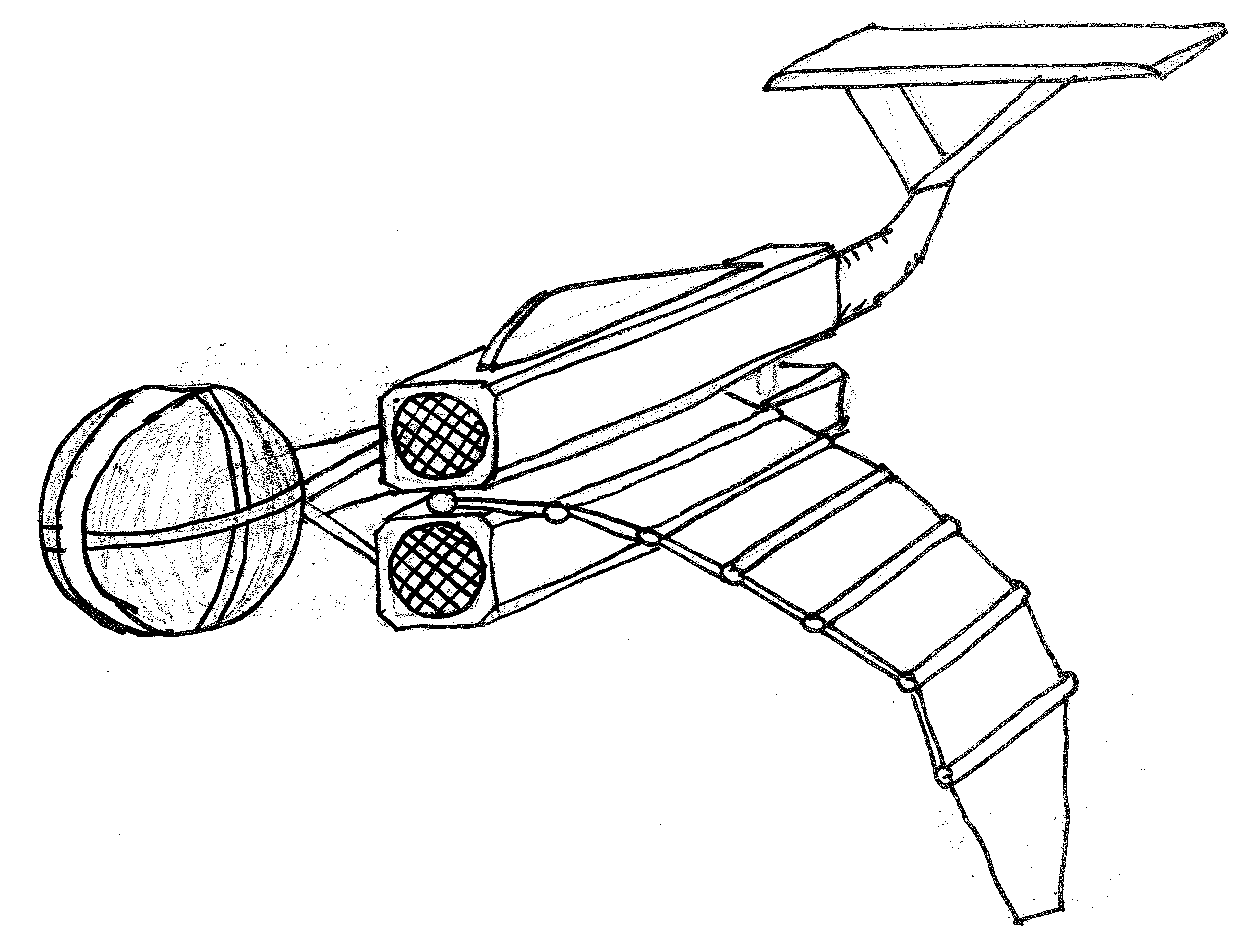
A theoretical basis for ornithopter research

There is a lot of seductive technology in the Dune novels. While you might like the stillsuit, I have found that my imagination was most captured by the ornithopters (perhaps the idea of recycling my urine, feces, and sweat into drinking water doesn’t capture my imagination).

It’s pretty obvious to me that the engineers in the Dune universe would not discuss the design of the ubiquitous ornithopters using metrics designed for fixed wing aircraft like we, apparently, do now. Phillip Burgers and David Alexander have taken a stab at creating a new measure of lift1 that is readily applicable to fixed wing aircraft, lift generating rotating cylinders, and things with flapping wings (i.e., ornithopters and bats): Continue reading “A theoretical basis for ornithopter research”

Mary-Claire King describes what makes a good scientist

About Svante Pääbo and Alan Wilson, quote in this must-read piece on Neanderthals and genomes:

“Each of them thought of very big ideas,” she told me. “And each of them was very good at translating those ideas into testable hypotheses. And then each of them was very good at developing the technology that’s necessary to test the hypotheses. And to have all three of those capacities is really remarkable.” Also, although “they were both very data-driven, neither was afraid to say outrageous things about their data, and neither was afraid to be wrong.”

If you’re never wrong in science, you’re not generating enough ideas.