
 “I want to be a Portuguese Man O’ War for Halloween” He asked if I meant a sexy Portuguese Man O’ War because that’s what happens to the majority of girl’s costumes. Uh no, of course I wanted it to be as close to anatomically correct as possible. He said he would be one too. Then he said “you know people will just think we’re jellyfish” which meant he knew that although they were cnidarians as well, they were definitely NOT jellyfish. *sigh* The Portuguese man o’ war (Physalia physalis) is a bad ass colonial organism. This doesn’t mean it has taken over an African country and exploited its people and resources (colonial style), but rather it is made up of many polyps coming together to form a super organism. On top there is a floating gas sac known as a pneumatophore and other polyps attach to this. Only one polyp is lucky enough to be the pneumatophore and the others fall into rank in one of the three remaining divisions: feeding, reproduction, or defense. The long tentacles of the defense troop can be up to 50 meters and have venom containing nematocysts. These stinging cells paralyze small prey and the feeding polyps begin the ocean buffet. Continue reading “Meet the Portugese Man o’ War”
Category: Curiosities of Nature
You carry your GPS with you
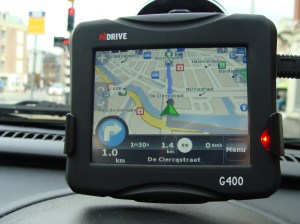
Somehow, when you get out of bed in the middle of the night, you manage to remember where the end of the bed is, how far it is to the bathroom and where the light switch is. You have developed a complex spatial memory of your house, and our brains are filled with countless other spatial maps (maybe some of us have fewer….cough, cough). How exactly does your brain encode this specific spatial information?
It turns out that is it using cells called grid cells, which work much like their name suggests. These neurons are spread out in a grid pattern in your brain and will generate an electrical spike in a pattern related to the direction you are moving. While this has been known about rats, mice and bats it has only recently been confirmed in humans. While fMRI experiments have suggested the existence of such cells, the only way to confirm that individual cells are spiking in response to a directional task is to make electrical recordings from them.
Aristotle wrestling with the concept of haploid gametes & diploid organisms
He takes on the problems of Pangenesis to boot, 2,100 years before Darwin adopted it as his theory of heredity.
On the Generation of Animals, 722b:
Again, if the semen come from all parts of both parents alike, the result is two animals, for the offspring will have all the parts of both. Wherefore Empedocles seems to say what agrees pretty well with this view (if we are to adopt it), to a certain extent at any rate, but to be wrong if we think otherwise. What he says agrees with it when he declares that there is a sort of tally in the male and female, and that the whole offspring does not come from either, ‘but sundered in the fashion of limbs, some in man’s…’ For why does not the female generate from herself if the semen comes from all parts alike and she has a receptacle ready in the uterus? But, it seems, either it does not come from all the parts, or if it does it is in the way Empedocles says, not the same parts coming from each parent, which is why they need intercourse with each other.
Yet this is impossible…
– Translation by Arthur Platt, from The Basic Works of Aristotle, Richard McKeon, ed., Modern Library (1941).
Meet the Olinguito

The Smithsonian has just released the news that a new species of mammal has been discovered in the Andes. The Olinguito is a member of the raccoon family (Procyonidae) and it is distinct from olingos. This cutie creature has been aptly described as a cross between a house cat and a teddy bear in appearance. Like a lot of incredibly cool animals, these guys hang out in the cloud forests. Continue reading “Meet the Olinguito”
Peer reviewers rejected Fisher’s paper that defined variance
The rejection of R.A. Fisher’s groundbreaking paper defining variance seems to be one of the bigger mistakes of peer review:
Fisher completed his paper on Mendelism and biometry by June 1916 and submitted the paper to the Royal Society of London for publication. The referees suggested it be withdrawn. He subsequently submitted the paper to the Royal Society of Edinburgh, which with his financial assistance published it on 1 October 1918 under the title “The Correlation between Relatives on the Supposition of Mendelian Inheritance.”
– The Origins of Theoretical Population Genetics, William Provine (1971), p. 144
This paper has 2439 citations according to Google (which sounds extremely low), as well as its own Wikipedia page. I’d call that a success.
In addition to its importance in statistics, the paper was a key landmark in the synthesis of genetics, evolution, and biometry.
 The Finch and Pea