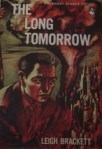
 Post-apocalyptic Fundamentalism
Leigh Brackett’s The Long Tomorrow is one of many post-apocalyptic novels that envision society returned to a 19th century agrarian state. The rural settings of these novels are commonly used to explore life in a society driven by fear, fear or technology, or change, or those who are different. A society based on fear of technology is what Leigh Brackett explores here.
The Long Tomorrow tells the story of a North American society that, in the wake of nuclear devastation, became essentially Mennonite, since it was the Amish and the Mennonites who were able to adapt most effectively to a world without modern, 20th century technology. And thus Mennonite beliefs about technology, in some form or another, spread widely. Technology, curiosity about technology, and scientific knowledge (and the benefits of that knowledge) are frowned upon, and in some cases even punished severely.
This clamp-down on scientific exploration is enforced by the United States government – after the holocaust, the Thirtieth Amendment to the U.S. Constitution forces a rural, agriculturalist society on the nation by limiting the size of all settlements to less than 1,000 people. Without industry and the pooled resources of cities, there is no manufacturing, no science, and no technological progress. As a result, people are provincial, superstitious, and suspicious of change, and a ripe harvest for fundamentalist preachers.
Continue reading “Ending the World for 60 Years: 1955”

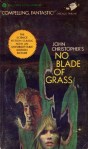 John Christopher’s 1956 No Blade of Grass is an extremely compelling page turner that portrays our moral traditions and social glue as being so fragile that they can be swept away in a day. Compassion, mercy, and even friendliness are not as hard-wired as we would hope, and they quickly dissolve when the urgency of survival forces us to view all other people as competitors.
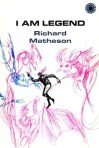 Nature is never inexplicable
 The possibility of human extinction in End of the World sci-fi is sometimes paired with a consideration of our next evolutionary step – a concept that is less scientific than it sounds (evolution shouldn’t be considered in such linear terms), but one that does make an effective fictional tool for thinking about human impermanence.
 The Finch and Pea