Airport Body Scanners won’t give you cancer

With the big holidays just around the corner, thousands of folks are about to get their first taste of the TSA’s new virtual strip search machines – X-ray body scanners. Privacy issues may be the main concern for most people, but the safety of these things has some people worried.

Back in April, a group of UCSF professors with a range of expertise in x-rays and biology wrote a letter to White House advisor John Holdren (PDF) raising some potential safety concerns about the TSA’s X-ray scanners. Continue reading “Airport Body Scanners won’t give you cancer”

House Republican Science Agenda

Oh boy:

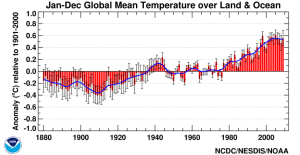
Issa’s priorities are, to an astonishing degree, representative of the new Republican House majority. Last year, when John Boehner, of Ohio, the incoming House Speaker, was asked by ABC’s George Stephanopoulos about his party’s plans to address climate change, he had this to say: “The idea that carbon dioxide is a carcinogen, that it is harmful to our environment, is almost comical.” John Shimkus, of Illinois, is one of four members now vying for the chairmanship of the House Committee on Energy and Commerce. At a congressional hearing in 2009, he dismissed the dangers of climate change by quoting Genesis 8:22: “As long as the earth endures, seedtime and harvest, cold and heat, summer and winter, day and night will never cease.” He added, “I believe that’s the infallible word of God, and that’s the way it’s going to be for His creation.” Another contender for the Energy Committee post, Joe Barton, of Texas—who is one of the House’s top recipients of contributions from the oil-and-gas industry—argues that CO2 emissions have nothing to do with climate change, and, in any event, people will just adapt. “When it rains, we find shelter,” he has said. “When it’s hot, we get shade. When it’s cold, we find a warm place to stay.” (Barton is perhaps best known for the apology he offered, last June, to the C.E.O. of BP, Tony Hayward, for what he described as a “shakedown” of the company by the Obama Administration.)

See “Uncomfortable Climate” at the New Yorker.

Apparently the position of chair of the House Committee on Energy and Commerce goes to the Representative who can deny the most science.

Apocalypse 1955: Growing Up Telepathic

“What we’ve got here is a failure to communicate.”

The much-revered writers of the Golden Age of science fiction can be quite rough around the edges, even downright embarrassing on occasion. The writing is hurried, the plots of plot-driven books are disturbingly inconsistent, and the characters are primarily stock types and authorial mouthpieces. To top it off, many of these novels are ambitious, earnestly offered as novels of big ideas. These ideas are usually sympathetic (tolerance, freedom, racial equality, escape from religious tyranny), but generally reduced to platitudes expressed in long, somnolent sermons by the your standard pointy-headed philosopher-scientist.

So why bother to read these books? Continue reading “Apocalypse 1955: Growing Up Telepathic”

Science is not baseball

I like Nicholas Wade, and think that his latest NY Times piece on basic research is worth reading. However, I take issue with his overly simplistic characterization of how research works:

Basic research, the attempt to understand the fundamental principles of science, is so risky, in fact, that only the federal government is willing to keep pouring money into it. It is a venture that produces far fewer hits than misses….

If basic research is fraught with such a high failure rate, why then does it yield such rich economic returns? The answer is that such government financing agencies as the National Institutes of Health and the National Science Foundation are like the managers of a stock index fund: they buy everything in the market, and the few spectacular winners make up for all the disasters.

This is not right.* Continue reading “Science is not baseball”

Virtual keyboards and QWERTY alternatives

With virtual keyboards so common, it’s should be easy for alternative, more efficient keyboard layouts to make headway, since, as we’ve all heard, the default QWERTY layout was designed to slow typists down. So why aren’t more devices (or at least the iPhone) giving you options, like the Dvorak layout? From the Hartford Advocate:

If you consider all of the ways that technology has changed, even in the past four or five years, it seems strange that the majority of us continue to use something as outmoded and inefficiently designed as the QWERTY keyboard.

Our things are constantly being tweaked and updated and resold to us as more comfortable, more useful, easier to manage and better organized. But keyboard-comfort improvement is basically limited to gel pads and little flip-out booster legs to prop the thing up. Unless you’re willing to make a drastic change, your keyboard options are slight, limited…

The WSJ story reported on the frustrations of Dvorak users with their iPhones, which didn’t come with a Dvorak keyboard option.

I’d be willing to give Dvorak a try, but I just don’t see this other alternative being useful:

What will more likely become standard-issue might be a virtual version of the Fast Finger Keyboard that came out a few months ago, which a lot of bloggers dismissed as stupid. It has function keys that say “ASAP,” “BTW,” “BRB,” “LOL,” “IMO,” etc