
Personalized medicine versus human nature

Is genomics a medical game changer?

A brief review in the NY Times of recent books on ‘omics medicine:

In “Am I My Genes?,” the psychiatrist and ethicist Dr. Robert L. Klitzman plunges readers into the world of genomic medicine as it exists today: a barely mapped terrain of immense overlapping uncertainties. Many thousands of patients are bravely stumbling along in there: The book is based on interviews with 64 whose family history suggested a risk for the mutations associated with breast and ovarian cancers, the neurological killer Huntington’s disease or the destructive lung condition alpha-1 antitrypsin deficiency… Dr. Klitzman moves through all the basic landmarks, including the big ones: “Do I want to know?,” “Whom should I tell?” and “Why me?”

But for uninvolved observers, perhaps most striking is the book’s clear demonstration that science of the future notwithstanding, human beings faced with illness or its likelihood tend to react in the same old human ways. They protest, weep, change their diet, blame stress, consult a psychic, consult another psychic, accept the inevitable and generally muddle through valiantly.

In other words, the genomic revolution may not wind up changing the landscape of illness quite as much as its proponents may envision: patterns of thought and reaction run deep. As one of Dr. Klitzman’s patients remarks calmly, “It might run in families, but I don’t think it’s genetic.” She may have the family cancer, but “now, everyone is showing up with cancer.”

Well, when personalized, ‘omic medicine does more than just predict disease outcomes, when it actually and reliably leads to cures, remissions, etc., then people will have to accept the inevitable less often. I don’t imagine that this will put psychics out of business, but it will relieve a lot of suffering.
Thanks for nothing, PubMed

After working like a fiend to finish the latest paper describing my genius idea, things are looking good – the figures are in place, the story is coherent, paragraphs have topic sentences, the methods are all there, and it’s time to insert references. Except PubMed broke my citation manager. The solution? Buy a $100 upgrade. Sigh… I suppose it’s time to finally upgrade to Papers 2. So long, Bookends.

How to zoomorphically slur the people in your life

Tired of restricting yourself to the overused ‘bovine’? Chris Love has some great suggestions that will expand the biological diversity of your insults:

ant: formicine: ex. “Overwhelmed by the formicine crowds at the officeplex, we sought refuge in the nearest bar.”

The most important of these adjectives is obviously “hircine.” Of, pertaining to, or resembling a goat. Ex. “The man created a new alternative energy source that reduced conflict in the world, and saved the planet. He also wrote a symphony for the ages. As hircine a fellow as you’ll ever find.”

You owe it to yourself and to those you slur to check out the entire list.

Kids, don’t try this at home

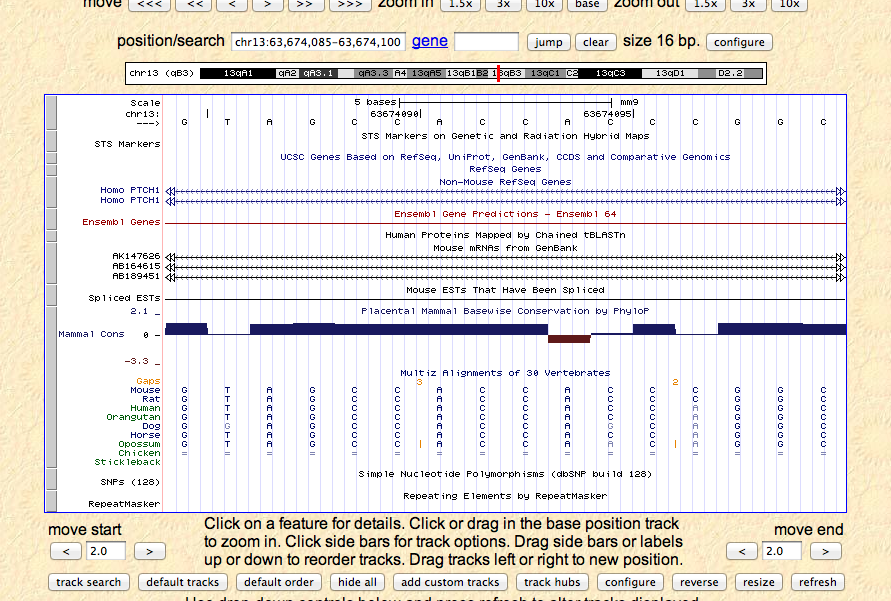
No matter what your mother told you when you were twelve, the most surefire way to promote blindness is in fact to stare at UCSC Genome Browser windows all day.

I really should try to automate more, but sometimes it’s hard to avoid old-fashioned sequence gazing.

RealClimate schools WSJ on how to compare models to data

On how to decide whether your model is falsified:

The WSJ authors’ main point is that if the data doesn’t conform to predictions, the theory is “falsified”. They claim to show that global mean temperature data hasn’t conformed to climate model predictions, and so the models are falsified.
But let’s look at the graph… Continue reading “RealClimate schools WSJ on how to compare models to data”