
Last Man Science Fiction, 1805: The Bible as Gothic Futuristic Romance

Jean-Baptiste François Xavier Cousin de Grainville’s The Last Man (1805)

martinLastManLong-time readers know I’m a fan of post-apocalyptic science fiction, because it reveals so much about our feelings toward science and its place in civilization. Science mediates between us and nature; in modern civilization, we rarely encounter the raw power of nature without science’s buffering effects.

But are we like the sorcerer’s apprentice, putting the world at risk by playing with powers that are out of our league? Have we used science to truly transcend nature’s casual brutality, or are we just kidding ourselves? How much does our own human nature depend on the scientific underpinnings of civilization, and what happens when science’s support is yanked away — will it be Mad Max-style battling warlords, or pastoral communities in tune with nature’s rhythms, as in Earth Abides?

In End of the World fiction, the answers to these questions are all over the map, and that’s why this genre is so awesome.

I’ve already covered post-apocalyptic SF from the 40’s and 50’s, but it’s time to go back to the beginning of the genre, with the very first book that you could call a Dying Earth science fiction novel: The Last Man, by the French priest Jean-Baptiste François Xavier Cousin de Grainville. Published in 1805, it’s a bizarre rewrite of the Book of Revelations as futuristic Gothic novel, filled with temples, spirits, visions, and trans-Atlantic airships. Continue reading “Last Man Science Fiction, 1805: The Bible as Gothic Futuristic Romance”
National Academy to Congress: For economic benefits, support basic research

It’s a sobering exercise to go through your day and identify those common, essential things that exist only thanks to fundamental scientific discoveries made in the last 100 years. Of course some of our technology was developed in the Edisonian style, invented without any recourse to a understanding of the underlying science. But so much of the technology of modern life would not be possible without major basic science discoveries made during the 20th century. How we eat, communicate, travel, work and care for our health are all closely tied up with fundamental discoveries made in the past century. In other words, basic science has made a huge contribution to society’s economic growth and well-being.

That basic science generates huge material benefits has been the major justification for federally-funded research since Vannevar Bush’s 1945 manifesto. Unlike, say, the National Endowment for the Arts, which exists mainly to support a vibrant culture, federal science funding is specifically intended to generate tangible economic benefits for society — not simply to support science for its own sake. Continue reading “National Academy to Congress: For economic benefits, support basic research”

Haldane, Huxley, dystopia, biopunk, biotech, and Windup Girl

All that in six minutes and 40 seconds. Last week I gave my first Pecha Kucha talk at Openly Disruptive’s Disruptive Diner series. The topic was science foreshadowed by science fiction. Have a look. The script of my talk is below the fold. If you want the post-talk Q&A session you can find it on Openly Disruptive’s YouTube channel, where you’ll also find science fiction author Mark Tiedemann’s talk on robots in our society and imaginations.


Continue reading “Haldane, Huxley, dystopia, biopunk, biotech, and Windup Girl”

Modern Statistics make the absurd appear significant

This is too good not to share, from a preprint by Andrew Gelman and Eric Loken, “The garden of forking paths: Why multiple comparisons can be a problem, even when there is no ‘fishing expedition’ or ‘p-hacking’ and the research hypothesis was posited ahead of time”

Without modern statistics, we find it unlikely that people would take seriously a claim about the general population of women, based on two survey questions asked to 100 volunteers on the internet and 24 college students. But with the p-value, a result can be declared significant and deemed worth publishing in a leading journal in psychology.

The paper is here (PDF).

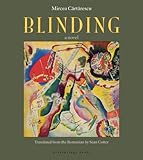
The “poetry you find in science” in Cartarescu’s Blinding

Romanian author Mircea Cartarescu’s massive novel Blinding is one of the best books I’ve read in a long time – and I’m only 80 pages in. It’s a dream autobiography/family history, heavily influenced by scientific ideas and metaphors. The author described his thinking to Bookforum:

It is the point at which science is unified with poetry, with geography, with mathematics, with religion, with everything you can imagine. Three quarters of the books I read are scientific books. I’m very fond of the poetry you find in science. I read a lot about subatomic physics, biology, entomology, the physiology of the brain, and so on. I’ve always thought that being alive is a great gift, one that should be explored.

If you like science in poetry or literature, this book is worth checking out.