Science Caturday: Kitteh Quake Time!

thekick

It’s almost time for football season! What has that to do with either science or cats, you ask? Bear with us. We’ll get there.

A few weeks ago, Kathryn Schulz published a widely-noticed article in The New Yorker about “The Really Big One,” that is, on the likelihood of a huge earthquake in the Pacific Northwest of the US. The piece pointed out the dense population and poor earthquake-readiness of the area around the Cascadia subduction zone, which includes the city of Seattle, Washington.

However, at least some scientists in Seattle are preparing for earthquakes, and they’re using their local NFL fans to help them do it. The Seattle Seahawks’ fans are famously rowdy and noisy. After Marshawn Lynch’s “Beast Quake” touchdown in the 2011 NFL playoffs, the crowd’s roars not only shook the Seattle stadium, but also the surrounding ground.

We know this because scientists at the University of Washington in Seattle had placed a sensor just across the street from the stadium. Seismologist John Vidale noticed a clear signal post-touchdown. Vidale realized that the energy of 70,000 fans jumping around for a minute could come close to the energy released by a small earthquake and that athletic events might be a good venue for testing seismic instruments. Football games have the added benefit of being scheduled in advance, unlike earthquakes.

Vidale and his colleagues installed three portable sensors inside the Seahawks’ stadium just before the January 2015 NFL playoff games in Seattle. Somewhat surprisingly, the strongest signal didn’t show up during a game-changing play, but during the halftime show, as the crowd jumped and danced with the music. In addition to testing sensors, the researchers were able to develop software, called QuickShake, to display the seismic recordings on the scoreboard with a delay of just a few seconds. All of this work will help them better measure and analyze seismic activity, and potentially assist in improving building design and earthquake preparedness.

You can learn more about the scientists’ work with the Seahawks here. So that’s the science. Where, you ask, are the cats?

marshawn

Told you we’d get there.

Science Caturday: Playing Hard to Pet

inbestigaet

Why do cats always head straight for that one person who hates or fears them, while avoiding the person who desperately wants to cuddle? According to this article in Slate, the answer is actually slightly more complex than “because fuck you.”

According to Diane Meriwether, “all aggression in the feline world starts with staring,” and people who love cats will tend to look straight at a kitty, while those who don’t will avoid catching the cat’s eye. Furthermore, “When humans don’t like cats, they try not to pet them. If the cat comes over, the person might instinctively pet it once, then he withdraws his hand and hopes the cat will go away. Of course, playing hard-to-get with a cat is one of the best ways to make friends.”

So basically, cats love it when you act like a jerk at a bar, giving them a tiny bit of attention while pretending you’re not really interested, and then backing off. Sigh. If you really can’t bring yourself to act like this, you can always try filling your pockets with catnip.


Science Caturday: That’s Gonna Leave a Mark

designs

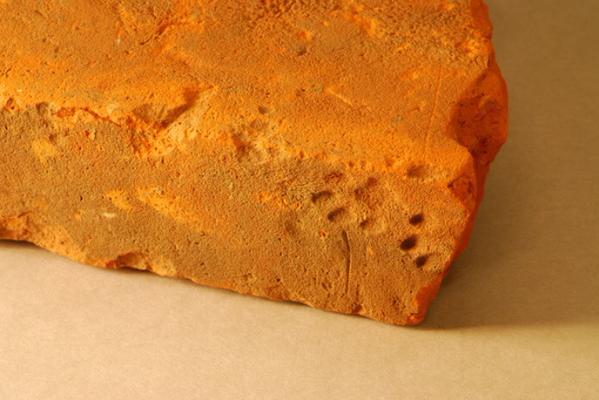
A researcher at a British museum recently discovered perfectly preserved kitteh paw prints on a roof tile dating from Roman times.  An archaeologist at Gloucester City Museum who was examining thousands of fragments of Roman roof tile came across the uniquely-marked fragment, which was excavated in Gloucester in 1969. Archaeologists believe a cat walked across some wet tiles which were drying in the sun in about AD 100.

Lise Noakes of Gloucester City Council noted that “dog paw prints, people’s boot prints and even a piglet’s trotter print have all been found on tiles from Roman Gloucester, but cat prints are very rare.”  Most cats, of course, prefer to keep their paws clean and dry. But now that they know their prints are rare and valuable, some enterprising kittehs are sure to jump into the field of custom paint and cement work.

catpawprint


The Art of Science: Radical Elements

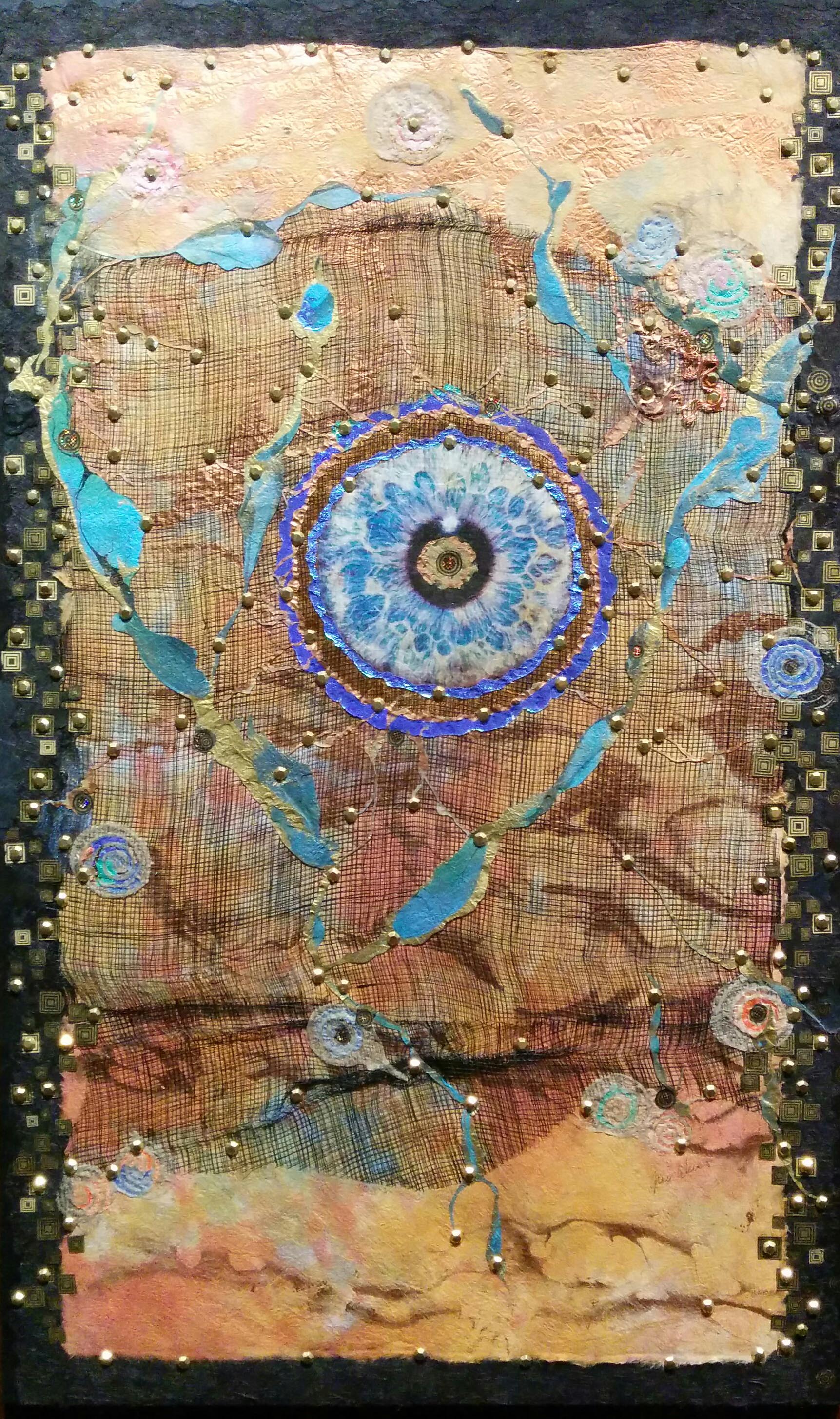
Grace Harbin Wever, Iridium - My Darkness to Light II, 2013, Mixed Media
Grace Harbin Wever, Iridium – My Darkness to Light II, 2013, Mixed Media

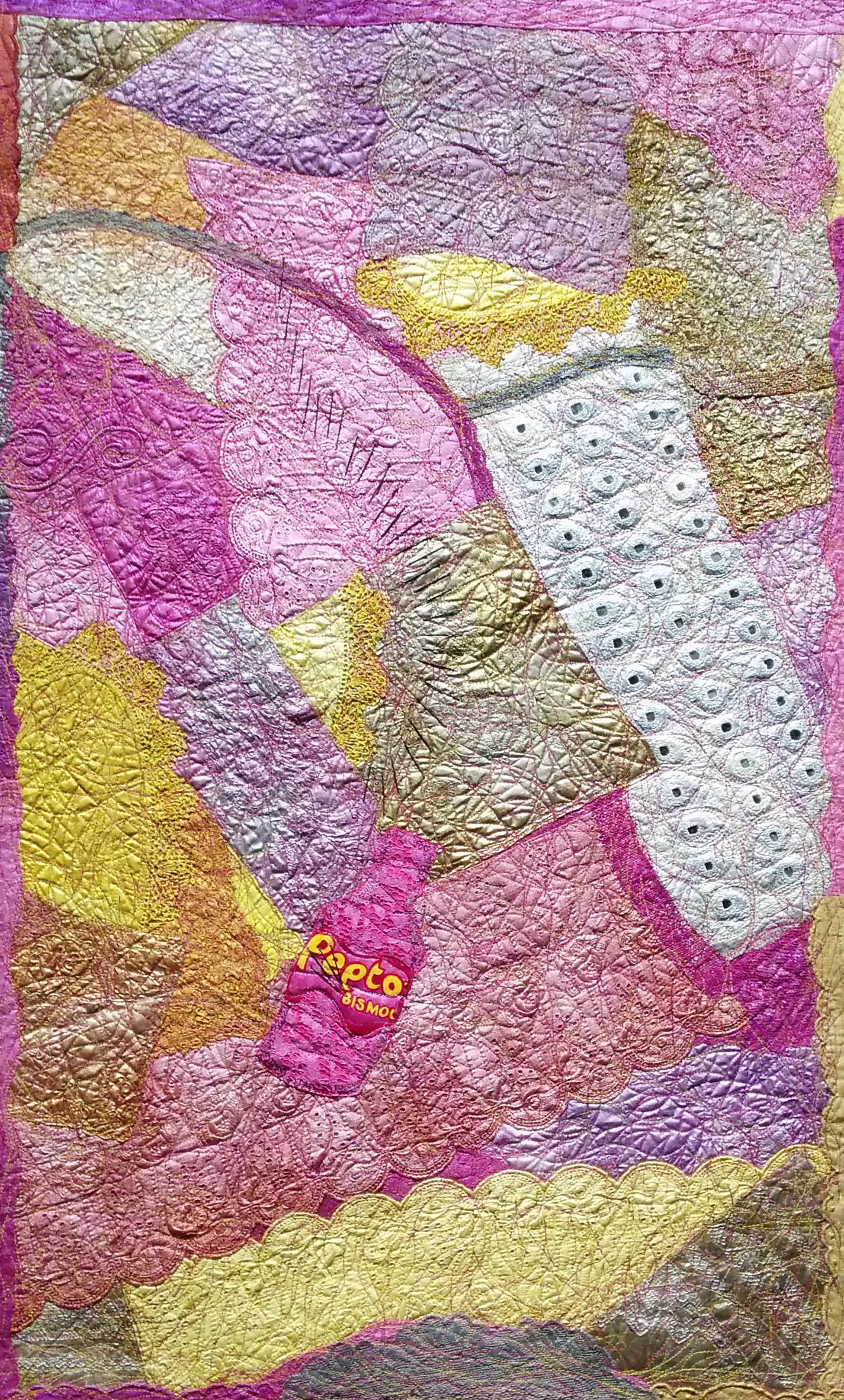
Soft materials meet hard science in Radical Elements, an exhibition at the National Academy of Sciences featuring 40 contemporary art quilts, each inspired by a different element from the periodic table. The works in the show, organized by Studio Art Quilt Associates, explore the elements in many ways, ranging from their industrial uses to personal memories associated with them. For example, Barbara Schulman’s piece, A Pepto Bismuth Story (below), started with the “beautiful crystalline structure” and iridescent colors of the element, which reminded the artist of her mother’s hankies and lace, so she incorporated them into the design along with bismuth’s best-known consumer product, Pepto-Bismol.

Grace Harbin Wever’s Iridium – My Darkness to Light II (above), takes a more strictly scientific idea, although she expresses it in a highly artistic, indirect way. The artist, a former cell biologist, was intrigued when she learned that iridium microelectrodes had been successfully implanted into the human brain as part of studies in vision and perception. A range of materials, including holographic fabric and copper wire, surround the central eye image, nodding to the juxtaposition of the natural and the man-made that characterizes recent advances in the field of vision.

Indeed, very few of the quilts on display stick to the traditional materials of fabric, thread and batting. Materials used range from duct tape and aluminum foil to keyboard keys and dining utensils. Curator Jill Rumoshosky Werner notes, “In a relatively short period of time, the field of art quilting has undergone a fundamental change. The primary focus has shifted from decorating the surface of a quilted wall hanging to a much broader acceptance of ideas, styles, and materials.”

Radical Elements is on exhibit at the NAS Building in Washington, DC, through October 19th.  Many of the quilts can be seen online here.

Barbara Schulman, A Pepto Bismuth Story, 2013, Mixed Media

Science Caturday: Home, Heavy Home

kepler cat

The exciting news from space keeps coming – this week researchers announced the discovery of an “Earth-like planet” called Kepler-452b. The new planet, discovered by researchers using NASA’s Kepler space telescope, orbits a sun-like star at about the same distance that Earth orbits the sun. NASA’s Jon Jenkins says that it’s the nearest thing to another Earth-sun twin system that scientists have found.

The Kepler team’s observations indicate that Kepler-452b may be rocky like Earth, and that it is about 6 billion years old, 1.5 billion years older than Earth, and 60 percent larger in diameter. Its star, Kepler 452, is also older, bigger and brighter than our sun.

One especially interesting finding: geologists believe that, if the planet is rocky, its gravity would be about twice that of Earth’s. This might make it difficult for humans to explore, but be perfect for cats, for whom, as we know, gravity is optional.