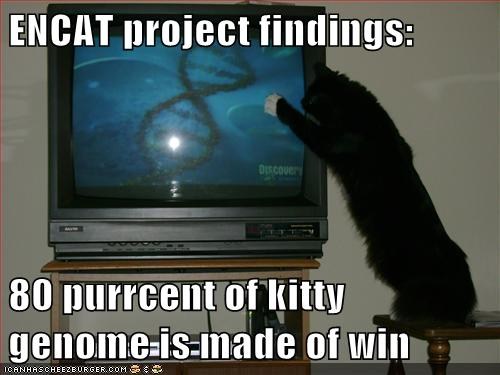
Ubber 20% = 5% snuggles, 5% noms, 5% ebil and 5% catnip. Moar interested in hoomin DNA? See Josh Witten’s latest post on the ENCODE project here.
LOL via Cheezburger.com

Ubber 20% = 5% snuggles, 5% noms, 5% ebil and 5% catnip. Moar interested in hoomin DNA? See Josh Witten’s latest post on the ENCODE project here.
LOL via Cheezburger.com
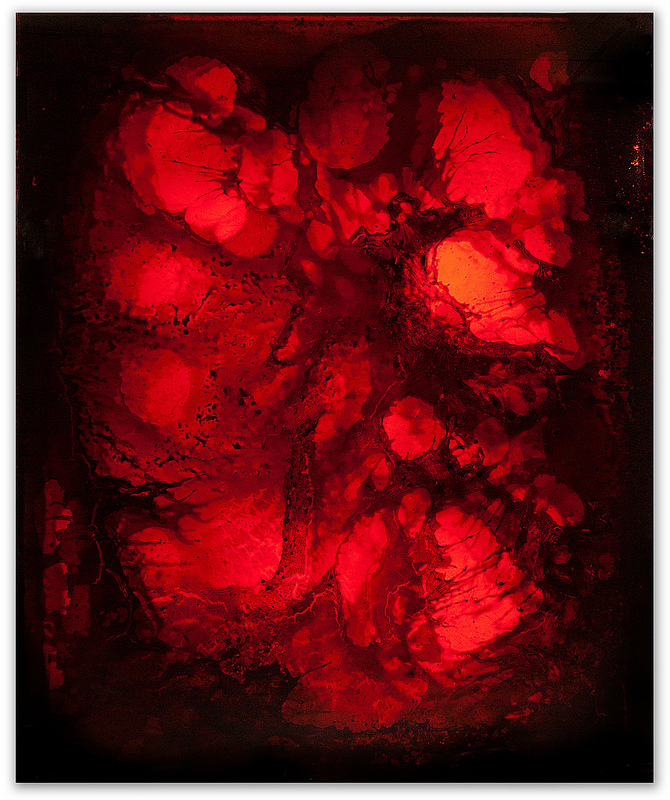
I get no kick from old bones
Nails, skin and hair
No, I really don’t care
Just give me that trickle, that flood
‘Cause I get a kick out of blood.
OK, so maybe that’s not quite how that song goes. I was inspired by bravura bloodwork of this week’s Art of Science pick, Jordan Eagles. Continue reading “The Art of Science: The Bloody Brilliance of Jordan Eagles”

Note: We usually feature lolcats here on Science Caturday, because we love both cats and science (and we like to LOL). But today we haz a more serious kitty science post.
Most cats love to be stroked, but many older cats suffer from osteoarthritis, a condition that owners may not notice and can make even petting painful. Scientists at the University of Montreal recently published a study in the journal Research in Veterinary Science on how to recognize and treat osteoarthritis in cats. “Osteoarthritis frequently affects cats’ elbows, backs and hips and joints in the hind limbs, and its prevalence increases dramatically with age. More than 80 % of cats older than 11 years old have it,” explained lead author Eric Troncy of the university’s Faculty of Veterinary Medicine. Continue reading “Science Caturday: New Treatments for Old Kitties”
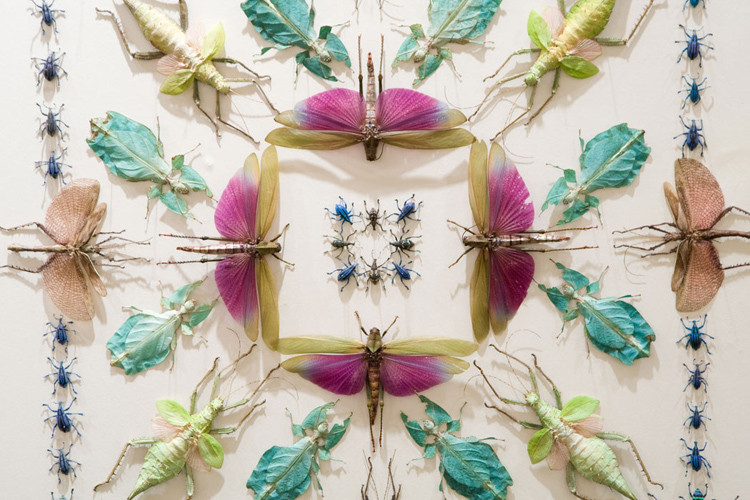
Bugs crawling up the walls are the stuff of nightmares for many, but they become stunning art in the hands of Jennifer Angus. A professor at the University of Wisconsin-Madison, Angus has for years used real, dead insects as her primary artistic medium. Her compositions, which are usually pinned to gallery walls, often refer to Victorian decorative motifs, which in turn recall the insect-collecting habits of 19th century naturalists.
Like them, she gathers her insects from around the world, particularly Thailand and Malaysia. While she notes that none of the insects she uses in her work are endangered species, she hopes that her art will spur an interest in both entomology and rainforest preservation in her audience. The eye-popping colors of her artwork are all natural, she says – she does not enhance the insects with paints or dyes. Angus’ work is on exhibit at the Jack Olson Gallery at Northern Illinois University through February 28, and you can see more on her website.
Photo via Wired.com

 The Finch and Pea