Tortoise vs Hare, but in a vacuum this time

We all know how gravity is supposed to work. Without air resistance, a feather and a bowling ball (the standardized materials for all gravitational tests) should accelerate toward the center of the Earth at the same rate, thus striking the ground at the same time. Humans have tested this. It works.

Although we know this thing, it is so far removed from our daily experience that it is still stunning to watch it happen. This fundamental principle is nicely illustrated in this video from the BBC. The video also nicely shows how amazed a roomful of individuals who know how the experiment will work can be when the experiment works exactly as expected.

That is why we need the scientific method to rigorously test hypotheses and incrementally build our knowledge of how the universe works. Our day-to-day experience of and intuition about the world is extremely valuable, but also extremely deceptive.

For the record, the tortoise vs hare in a vacuum race I alluded to in the title would be incredibly inhumane and disappointing, in addition to having no winner – unless, UNLESS we had the tortoise and hare race in spacesuits. Why aren’t we racing animals in spacesuits?

HT: Jared Heidinger

Deep Pterosaur Breaths

I cannot begin tell you how excited my children will be to learn that scientists think* giant pterosaurs may have breathed in a similar way to crocodilians when they get home from school today. Read Brian Switek’s explanation of the newest research at National Geographic Phenomena.

*Geist, N. R., Hillenius, W. J., Frey, E., Jones, T. D. and Elgin, R. A. (2014), Breathing in a box: Constraints on lung ventilation in giant pterosaurs. Anat Rec, 297: 2233–2253. doi: 10.1002/ar.22839

Science for the People: Survival Doc

sftp-square-fistonly-whitebgThis week, Science for the People is learning about the limits of the human body, and the essential science of survival. They talk to Dr. James Hubbard, creator of TheSurvivalDoctor.com, about emergency measures to take when a disaster has cut off your access to medical care. Dr. Rob Tarzwell of One Minute Medical School returns to explain what to do – and not do – when you’re stranded in the wilderness.

*Josh provides research help to Science for the People and is, therefore, completely biased.

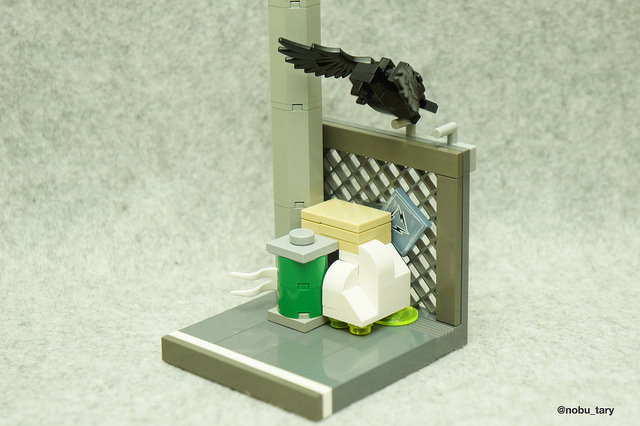
A Murder of Legos

"LEGO Crow" by nobu_tary (All Rights Reserved; Used with Permission)
“LEGO Crow” by nobu_tary (All Rights Reserved; Used with Permission)

It might be enough to say that I love Lego depictions of biology just because they are lovely. It might; but that would go against my nature. After a period of intense navel gazing, I’ve concluded that my febrile brain likes the idea of creating elegance from a simple set of basic building blocks – much like actual biology does.

This build of a crow by nobu_tary recently caught my fancy. It uses very few pieces to capture the essence of the bird and allow the dynamic motion of the wings to be represented.

"LEGO Crow" by nobu_tary (All Rights Reserved; Used with Permission)
“LEGO Crow” by nobu_tary (All Rights Reserved; Used with Permission)

HT: Brothers Brick

What Jim doesn’t know could fill a [INSERT REALLY BIG THING HERE]

Laura Helmuth pretty much nails it in her Slate piece on the auction of James Watson’s Nobel prize medal:

Watson…knows fuck all about history, human evolution, anthropology, sociology, psychology, or any rigorous study of intelligence or race. – Laura Helmuth

HT: Deborah Blum